The short answer
Is the Osaka traditional dinner show worth it?
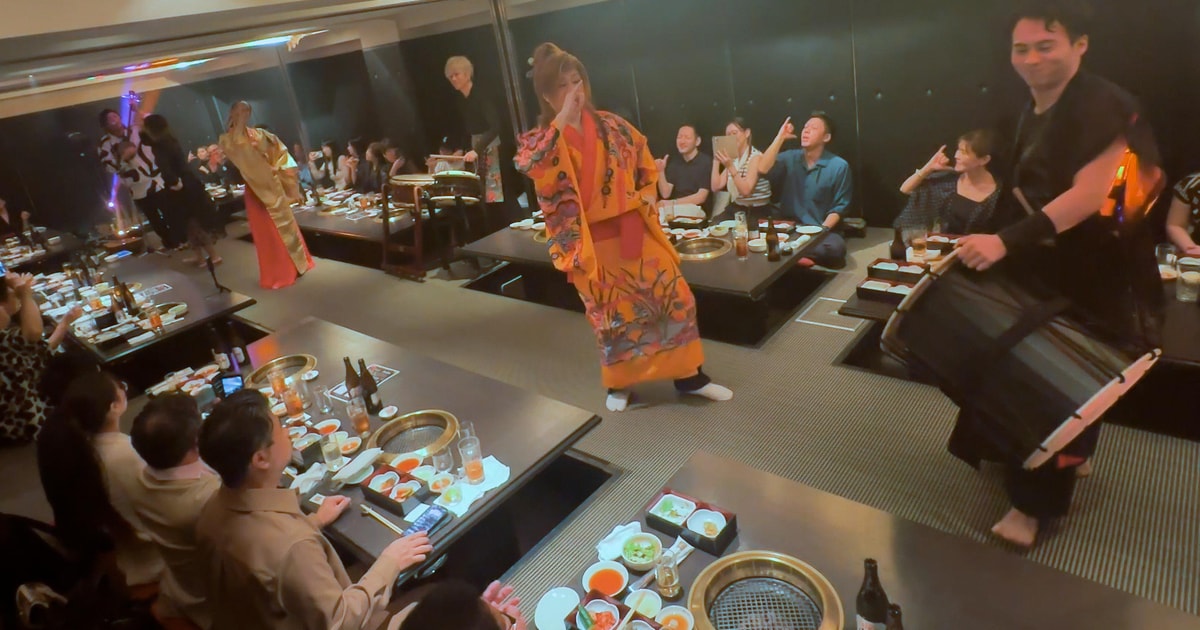
Yes. Costumed performers dance a few steps from your table, a Hannya mask drama and live traditional music fill the room, and then a premium Wagyu yakiniku course arrives with all-you-can-drink and a photo session with the cast. It is a close, lively way to meet Japanese stage arts in Osaka over dinner. The booking page is new and has one rating so far, five out of five, and cancelling is free, so you can hold an evening with no risk.
What makes the night
The stage
Nothing is set on a distant stage. The page promises dances and a dramatic performance steps from your table, so you watch costumes, masks and instruments at close range.
The dances
The programme names onnagata dances, traditional Japanese dance and a drama with the Hannya mask. Encyclopaedia entries explain each tradition, and our guides below walk through them.
The dinner
After the show comes a yakiniku course of premium Wagyu and seasonal dishes. Yakiniku means grilled meat, and the page says the restaurant is Osaka's oldest for it.
The drinks
All-you-can-drink runs through the service period, so the evening can unfold at a relaxed pace without counting rounds.
The keepsake
A photo session with the performers closes the night, which gives you a picture of the costumes up close.
Five threads behind the stage
Five threads behind the stage
A dinner show in Osaka borrows from centuries of stage tradition and from a grill-at-the-table style of eating that Osaka helped shape. Each note below condenses an encyclopaedia entry, and none can forecast what your own night will hold.
-
Onnagata
Female roles in the kabuki tradition
Wikipedia defines onnagata as male actors who play female roles in kabuki, a practice that began in 1629 after women were banned from kabuki performances. The entry adds that onnagata artistry involves many specific techniques, and that since the Meiji era women have also performed onnagata roles. The listing says only that the programme includes onnagata dances, and does not say who performs them.
-
The Hannya mask
A jealous demon with a changing face
Wikipedia says the hannya is a mask from Noh theatre representing a jealous female demon, with two sharp horns, metallic eyes and a leering mouth. It adds that the mask looks angry when the actor faces straight ahead and sorrowful when tilted slightly down. The plays Aoi no Ue and Dōjōji are among those where it appears. The booking page names the mask but not the story you will see.
-
The shamisen
Three strings, played with a plectrum
Wikipedia describes the shamisen as a three-stringed traditional instrument derived from the Chinese sanxian and played with a plectrum called a bachi. It says the ancestor of the instrument is believed to have arrived in the 16th century via Sakai, a port near Osaka, and that it accompanies kabuki and bunraku. The listing says only 'live traditional instruments', so the exact lineup is yours to discover.
-
Taiko
Drums with a long history
Wikipedia says taiko is a broad range of Japanese percussion instruments, and that historical records suggest drums reached Japan through Chinese and Korean influence as early as the 6th century. Their roles have ranged from communication to theatre accompaniment and religious ceremony. The listing's photographs show a large drum carried among the tables.
-
Yakiniku
Grilled meat, with Osaka roots
Wikipedia says yakiniku means grilled meat and that present-day yakiniku restaurants descend from Korean restaurants opened in Osaka and Tokyo around 1945 by Koreans in Japan. Diners typically cook bite-sized pieces on a grill built into the table, then dip them in tare sauces. Wikipedia's entry on Ikuno-ku notes the Tsuruhashi area of Osaka for its many yakiniku restaurants.
Sources: Wikipedia entries on Onnagata, Hannya, Shamisen, Taiko, Kabuki, Noh, Bunraku, Yakiniku, Wagyu and Ikuno-ku. Treat them as context; the running order of the evening is not described here.
From Noh masks to the yakiniku grill: a timeline
Eight dates behind the stage and the grill
- 14th century
Noh, Japan's oldest major theatre art still performed regularly, has been staged since this period
The source: Wikipedia, Noh
- 1500s
The ancestor of the shamisen reaches Japan, and is believed to have come through the port of Sakai near Osaka
The source: Wikipedia, Shamisen
- 1580s to 1610s
The name hannya appears in the writings of the monk, samurai and Noh actor Shimoma Nakataka
The source: Wikipedia, Hannya
- Early 1600s
Izumo no Okuni forms a female dance troupe in Kyoto, the start of kabuki
The source: Wikipedia, Kabuki
- 1629
Women are banned from kabuki, and the onnagata tradition of male actors in female roles begins
The source: Wikipedia, Onnagata
- 1684
Takemoto Gidayu founds the Takemoto puppet theatre in Osaka, with shamisen and chanting
The source: Wikipedia, Bunraku
- 1871
Beef consumption is legalised after the Meiji Restoration
The source: Wikipedia, Yakiniku
- Around 1945
Koreans in Japan open restaurants in Osaka and Tokyo from which today's yakiniku restaurants descend
The source: Wikipedia, Yakiniku
What the booking page lists
What the listing includes
This section follows the listing as it stood on 20 November 2026. What it does not mention, we do not claim, and your confirmation email is the final authority.
See open dates ↗From-prices were read when this guide was written and may have moved. The total depends on the date and your party.
- The restaurant
- The evening takes place at Shokudoen, which the listing calls Osaka's oldest yakiniku restaurant. That is the listing's own claim.
- The performance
- An intimate show runs steps from your table: onnagata dances, a dramatic performance with the Hannya mask, traditional Japanese dance and live traditional instruments.
- The dinner
- A yakiniku course of premium Wagyu and seasonal dishes. The menu changes with the seasons.
- The drinks
- All-you-can-drink during the service period.
- The photo session
- A photo session with the cast is included.
- Language
- The restaurant has English and Japanese staff.
- Length and booking window
- The evening lasts about three hours. The widget closes bookings three hours beforehand.
- Getting there
- No transfers are included. You travel to the venue yourself, and your confirmation gives the details.
A dinner show or a geisha performance
The dinner show or a geisha performance?
Osaka around the dinner show
More Osaka bookings to pair with it
The dinner show fills an evening. Around it sit a one-hour geisha performance, a tea ceremony in Dotonbori and a ring workshop built from vintage coins, each with its own rating on the booking site.
- View dates ↗
Traditional Japanese dinner show with live performance
Dancers and musicians perform steps from your table, then a premium Wagyu yakiniku course with all-you-can-drink and a photo session with the performers.
- View dates ↗
One-hour geisha performance and interactive experience
A one-hour evening of watching a geisha performance, joining a Q&A, playing a parlour game and taking photos, listed as wheelchair accessible.
- View dates ↗
Tea ceremony experience in Dotonbori
A 45-minute session with a tea master: the history of tea, a demonstration and making your own matcha.
- View dates ↗
Vintage Japanese coin ring workshop
A one-hour small-group workshop making a ring from an antique Japanese coin, near Namba and Shinsaibashi.
Also bookable in Osaka
Getting the evening right
Before you go: four small decisions
Allow three hours
The evening runs about three hours, so keep the rest of that day light. The widget closes bookings three hours before the evening.
Arrive early
The page asks guests to arrive 20 minutes before the start and warns that latecomers may not be admitted. Plan your journey with room to spare.
Tell the venue about allergies
The menu changes with the seasons, and the page asks you to mention any allergies in advance. Do that when you book.
Pair it with a daytime outing
A tea ceremony in Dotonbori or a coin-ring workshop fills an afternoon nicely before the dinner show.
Six deeper reads
Six reads on the stage, the music and the grill
- Start here Is the Osaka traditional dinner show worth it? An evening of dance and Wagyu, weighed up Dancers beside your table, a Wagyu yakiniku course and a photo session, weighed against the booking page. Read →
- Compared Dinner show or geisha performance: which Osaka evening suits you? A three-hour dinner with live theatre set beside a one-hour geisha experience, both read from their booking pages. Read →
- The stage Onnagata and the Hannya mask: the traditions behind the performance What encyclopaedia entries say about female-role dance and the demon mask, so you know what you are watching. Read →
- The music Shamisen and taiko: the sound of a Japanese dinner show What encyclopaedia entries say about the three-stringed shamisen and the drums, and how Osaka fits in. Read →
- The table Yakiniku in Osaka: how the grill dinner works and where it came from What yakiniku is, how a table grill works and why Osaka matters to its story, from encyclopaedia entries. Read →
- The beef Wagyu explained: breeds, grades and what premium can mean What encyclopaedia entries say about Wagyu cattle and Japan's beef grading, and what the listing does and does not say. Read →
FAQ
Questions before you reserve
Is the Osaka traditional dinner show worth it?
Yes. Dancers and musicians perform a few steps from your table, with onnagata dances, a Hannya mask drama and traditional dance, then you sit down to a premium Wagyu yakiniku course with all-you-can-drink and a photo session with the performers. The listing is new and has one five-star rating so far, and cancelling is free.
What will I see and hear?
The page lists onnagata dances, a dramatic performance with the Hannya mask, traditional Japanese dance and live traditional instruments, performed close to the tables.
What is the dinner?
A yakiniku course of premium Wagyu and seasonal dishes. The page says the menu changes with the seasons and does not list the dishes.
Are drinks included?
The page says all-you-can-drink is included during the service period. It does not list the drinks, so ask the venue if you have a particular need.
Is it suitable for vegetarians or vegans?
It is a Wagyu yakiniku dinner built around beef, so it is not a good fit for vegetarians or vegans, and the page mentions no vegetarian menu. Tell the venue about any dietary needs in advance.
What about allergies?
The page asks you to tell the venue about allergies in advance, because the menu changes with the seasons.
Can children come?
The page rules out children under 3. Ask the booking page about older children.
Is it wheelchair accessible?
No. The page rules out wheelchair users.
How early should I arrive?
The page asks guests to arrive 20 minutes early and warns that latecomers may not be admitted.
What if too few guests book?
The page says a minimum number of guests is needed. If too few book, the alternative is a new date or a complete refund, as the page puts it.
Is Japanese needed?
Not at all. The page lists English and Japanese staff.
Are transfers included?
No. You travel to the venue yourself, and your confirmation gives the details.
Is smoking allowed?
The page says smoking is allowed only in designated areas.
Is this the restaurant's own site?
No, we are an independent guide. The evening is booked on the booking page and run by the restaurant and its performers.
Why does it have only one review?
The listing is new on the booking site, so a single guest has rated it so far, with five out of five. A first rating is encouraging, but it is a very small sample.
Is the oldest-restaurant claim verified?
No. The listing calls Shokudoen Osaka's oldest yakiniku restaurant. We have not verified that, so treat it as the listing's own description.